

Taylor Swift is one of the celebrities whose use of private jets has been the subject of the most discussion in recent years. This is not only because of the number of flights associated with her planes, but above all because of the CO₂ emissions attributed to these trips, her use of carbon credits, and the privacy concerns related to the tracking of her flights.
The issue became particularly evident in 2022, when an analysis by the British environmental marketing firm Yard identified the private jet associated with Taylor Swift as one of the celebrity jets with the highest emissions. According to the data collected, between January and July of that year, the jet had made 170 flights, emitting an estimated 8,200 metric tons of CO₂.
This figure, however, requires an important clarification: the number of flights operated by an aircraft does not necessarily match the number of flights operated by its owner.
Taylor Swift and the private jet controversy: a brief summary of what happened
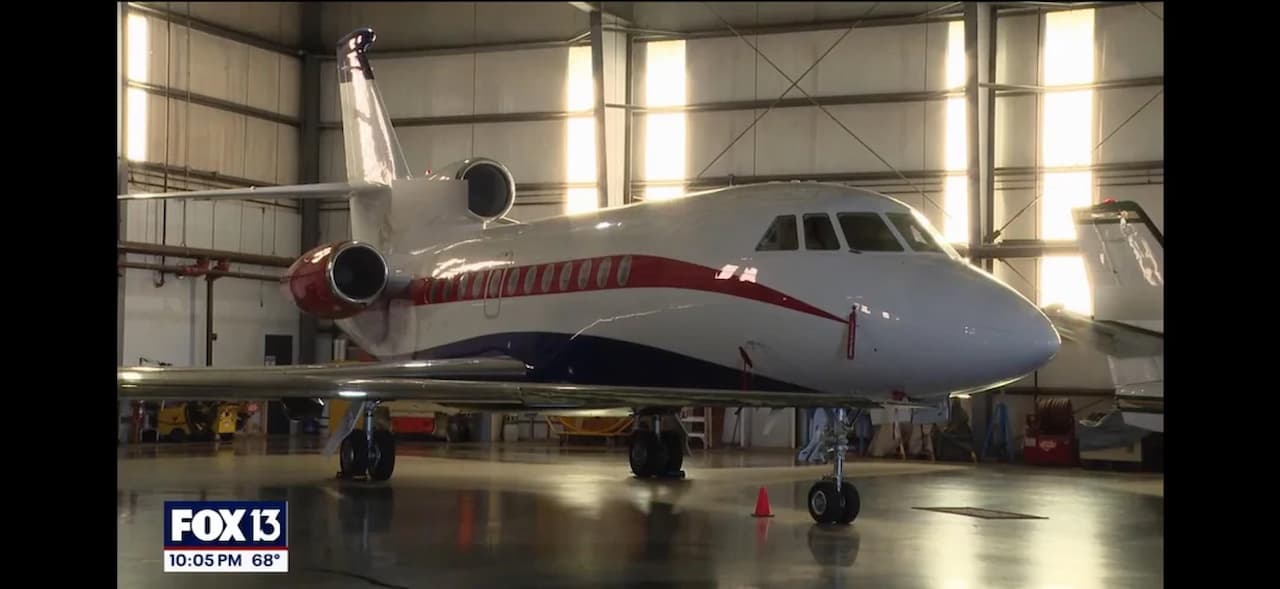
- 2022 – 170 Flights and CO₂ Emissions – The environmental marketing firm Yard has published an analysis based on flight data for Taylor Swift’s private jet collected by @CelebJets. Between January 1 and July 29, 2022, the jet associated with Taylor Swift had completed 170 flights, totaling approximately 22,923 minutes of flight time. Yard initially estimated the impact at 8,293.54 metric tons of CO₂e, a figure later recalculated to 2,971.50 metric tons of CO₂e.
- 2022 – Taylor Swift’s Challenge to the Attribution of Her Private Jet’s Emissions – Taylor Swift’s representatives dispute the attribution to the singer of emissions generated by the jet’s total flight activity, explaining that the aircraft is also used by other people. The distinction between the aircraft’s operations and those of its owner thus becomes one of the central elements of the controversy.
- February 2024 – Taylor Swift’s private flight from Tokyo to Las Vegas for the Super Bowl – Following her February 10 concert in Tokyo, attention turns to her trip to Las Vegas to attend the Super Bowl on February 11. The trip becomes one of the most talked-about examples of the singer’s use of a private jet during the Eras Tour.
- 2024 – Carbon Credits for the Eras Tour – A spokesperson for Taylor Swift states that the singer has purchased more than twice the number of carbon credits needed—according to her team’s estimate—to offset the emissions associated with the Eras Tour’s travel. The story once again brings the role and limitations of carbon offset projects to the forefront of the debate.
- December 2023–2024 – The Controversy Over Jet Tracking and the Privacy Issue – The issue also extends to privacy. Jack Sweeney, known for tracking planes owned by or associated with celebrities, publishes information about Taylor Swift’s jet’s movements through his tracking accounts. The singer’s lawyers challenge the publication of this information, arguing that it could pose a security risk to her. Sweeney, however, maintains that he uses publicly available flight data.
- June 2024 – Aircraft Vandalism at London Stansted – Just Stop Oil activists break into the restricted area of Stansted Airport and spray orange paint on two jets, claiming they intended to target Swift’s plane. Her plane, however, was not among those damaged.
- 2024 – The sale of Taylor Swift’s Dassault Falcon 900 – The singer sells one of her two private jets, a Dassault Falcon 900, while the Falcon 7X remains part of her fleet.
Taylor Swift’s private jet tracking data
The research conducted by environmental analysts at Yard was based on aircraft tracking data and did not allow for determining who was actually on board each flight. Taylor Swift’s representatives therefore contested the attribution of the emissions to the singer, explaining that her plane was regularly loaned to other people. Yard itself clarified that the data did not allow for determining whether the owners were on board each flight.
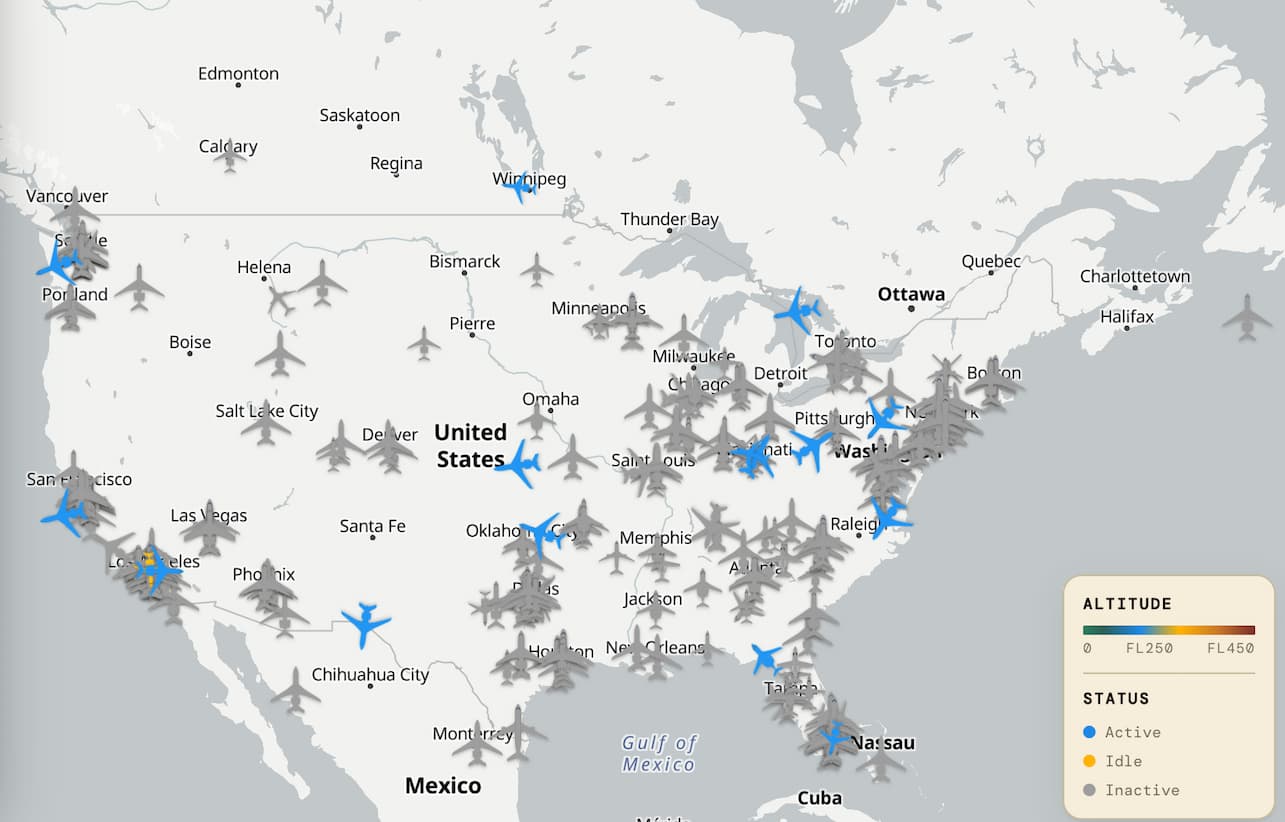
This is an important distinction even when discussing business aviation more generally. A private aircraft may be used by the owner, the owner’s family, associates, guests, or other authorized individuals. The data recorded by tracking systems describes the aircraft’s movements, not necessarily the identities of the passengers.
The Swift case has thus also brought a methodological issue into the spotlight: To what extent is it appropriate to attribute all the emissions generated by an airplane associated with a single person to that person?
This does not eliminate the environmental concerns associated with private aviation. It does, however, mean that we must distinguish between the impact of the aircraft itself and the impact that can actually be attributed to its owner.
The Eras Tour and the Private Jet Trip to the Super Bowl
The debate resurfaced with a vengeance in 2024, when the demands ofthe Eras Tour led Taylor Swift to undertake long international trips while she had to juggle concerts and other commitments.
One of the most talked-about incidents was the flight from Tokyo to Las Vegas after the concert on February 10, 2024, in time to attend the Super Bowl on February 11. The ability to cover a distance in just a few hours—a journey that would have been much more difficult to manage on a commercial flight—was one of the clearest examples of the operational advantages offered by private aviation.
At the same time, it is precisely this flexibility that has reignited the debate on CO₂ emissions. The case has been used as an example of the relationship between the operational freedom of business jets and their environmental impact.
The key point is precisely this: the ability to plan travel without being dependent on scheduled flight times makes it possible to handle very complex itineraries, but the use of a private jet by a limited number of passengers results in a significant environmental footprint.
Carbon credits: Does offsetting emissions mean eliminating them?
The issue of carbon credits also came up in the debate. In 2024, a spokesperson for Taylor Swift stated that the singer had purchased more than twice the number of carbon credits needed to offset the travel associated with the Eras Tour.
Here, it is important to distinguish between two concepts. A flight produces emissions when fuel is burned. Depending on the scheme used, the purchase of carbon credits can finance projects designed to avoid or remove an equivalent amount of emissions elsewhere. However, this does not mean that the emissions produced by the jet did not occur.
This is also why the carbon credit market has been the subject of discussions regarding the quality of projects, their actual ability to generate additional emissions reductions, and the feasibility of properly verifying the reported results.
In Taylor Swift’s case, therefore, the issue cannot be reduced to the question of whether or not she purchased carbon credits. The broader point concerns how effective offsets are as a tool for addressing the climate impact of private aviation.
Sustainable Aviation Fuel (SAF) for Private Jets
It is precisely on this issue that the debate can shift from the Taylor Swift case to the future of business aviation.
Offsetting, in fact, takes place after polluting emissions have been produced. An alternative approach is to try to reduce them directly through the use of lower-carbon fuels and new technologies.
Among the solutions in which the aviation industry is investing is Sustainable Aviation Fuel (SAF), a fuel produced from various raw materials that can be used in modern aircraft without requiring engine replacement. The environmental benefit is assessed over the fuel’s life cycle and varies depending on the raw materials and production processes.
To learn more about the costs, availability, and future of SAF in business aviation, see also our article Private Jet Fuel: How Much Does Refueling Cost, and Why SAF Is Changing the Industry.
SAF does not make a private jet zero-emission, nor does it automatically eliminate the climate impact of a flight. Its significance, however , lies in the fact that —unlike carbon offsetting—it directly affects the fuel used by the aircraft.
For private aviation, this could become one of the key elements of the transition in the coming years. The challenge is not only to produce SAF, but also to increase its availability, develop a sufficiently extensive supply chain, and make the fuel accessible to operators.
The Taylor Swift case therefore raises a question that goes beyond this single celebrity: Will the sustainability of private aviation depend primarily on offsetting emissions or on reducing emissions at the source?
The debate will likely continue to encompass both approaches, along with aircraft efficiency, flight management, and the development of new technologies.
The Issue of Jet Tracking and Privacy
There is also a second aspect of the Taylor Swift story that does not directly concern the environment: the tracking of private jets.
Aircraft movements can be reconstructed using publicly available flight data. Jack Sweeney, the American student who became known for his social media accounts dedicated to tracking the jets of celebrities, also relied on this type of information.

In Taylor Swift’s case, her lawyers objected to the publication of the plane’s movements, arguing that such detailed information could pose security risks for the singer. Sweeney, however, maintained that the data used was publicly available.
The controversy raises an issue that is more complex than the seemingly simple matter of the “jet tracker.”
On the one hand, flight data can be used to analyze the environmental impact of private aviation and to increase transparency. On the other hand, the systematic publication of a person’s travel patterns may have implications that go beyond mere environmental monitoring.
Even in this case, the distinction between the aircraft and its occupants remains. Knowing where a particular jet flew does not necessarily mean knowing who was on board. Even in 2024, Sweeney himself acknowledged that the data made it possible to know which aircraft was in flight, but not who was actually on board.
From the Dassault Falcon 900LX to the Falcon 7X
Over the years, Taylor Swift has owned several Dassault Falcon business jets. In 2024, she sold the Dassault Falcon 900LX, while the Falcon 7X remained in her possession.
For a more detailed overview of Taylor Swift’s fleet and the specifications of her aircraft, you can also consult AeroCorner’s in-depth article on her private jets.
The Dassault Falcon 7X belongs to the category of long-range business jets, designed to handle intercontinental flights by offering a long range and a cabin intended for a limited number of passengers.
PrivateJetFinder.com has also taken an in-depth look at the topic of ultra-long-range jets: in our comparison of Jeff Bezos’s Gulfstream G700 and Elon Musk’s G800, we analyzed the differences in range, cabin space, and features between the two models. See also: Jeff Bezos vs. Elon Musk: A Comparison of the Gulfstream G700 and G800.
This comparison helps illustrate just how advanced business jets designed for intercontinental flights are today, and how the choice of aircraft can depend on a variety of factors: range, space, comfort, and the ability to fly very long distances without stopping.
Taylor Swift and Private Jets: A Controversy Involving Private Aviation
The Taylor Swift case encapsulates many of the issues facing private aviation today.
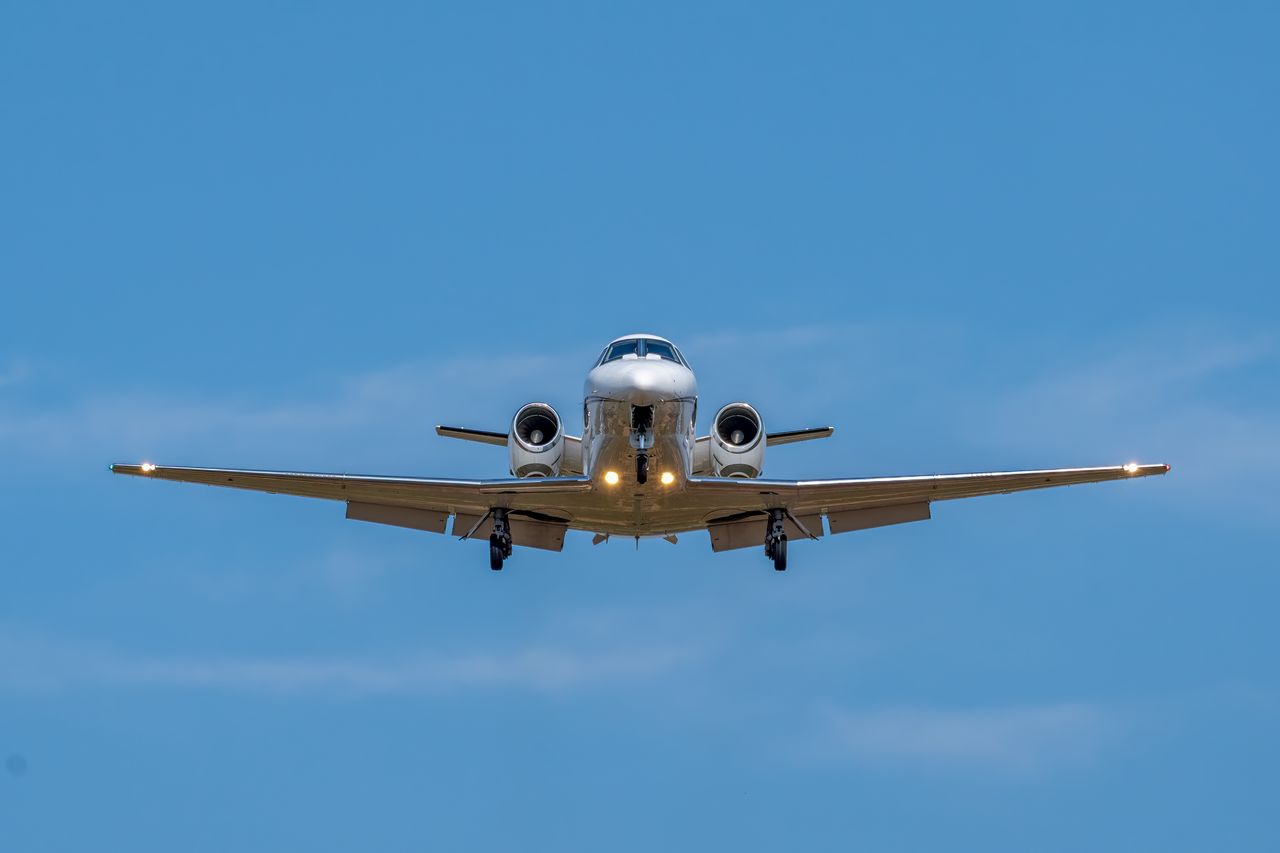
On the one hand, there is the ability to travel quickly between continents, reach airports closer to your destination, and plan a trip according to needs that would be difficult to meet with a scheduled flight.
On the other hand, there is the environmental impact, which is particularly significant when a business jet is used by only a few people and for a large number of flight hours.
Furthermore, in Taylor Swift’s case, the available data does not always make it possible to determine precisely which flights were taken by the singer herself and which were taken by other people using her plane. For this reason, the total number of recorded flights should not automatically be presented as the number of Taylor Swift’s flights.
The issue of carbon credits adds another layer to the debate, while the development of SAF fuel points to a possible shift in the industry: not just offsetting emissions, but seeking to reduce them directly through different fuels and technologies.
Taylor Swift isn’t the only celebrity to use a private jet, and her case alone does not represent the future of business aviation. However, her media exposure has turned her plane into a concrete example of a debate that is bound to increasingly affect the entire industry: how to balance the freedom and flexibility of business aviation with the need to reduce its environmental impact.
Frequently Asked Questions (FAQs) on Taylor Swift’s (and Other Celebrities’) Private Jets

How much does Taylor Swift’s Dassault Falcon 7X private jet cost?
The price Taylor Swift paid for her Dassault Falcon 7X private jet has not been made public. Since it is a 2009 model, its current value cannot be compared to the price of a new 7X: on the used market, the model can be worth approximately $16 million to $30 million, with higher values for newer and better-equipped models.
How much fuel does Taylor Swift’s private jet consume?
The Dassault Falcon 7X consumes approximately 1,000 kg of fuel per hour during economical cruise, while at higher speeds, fuel consumption can exceed 1,400 kg/h. The actual figure varies depending on flight conditions.
Is it legal to track the movements of VIPs’ private jets?
Yes, in general, tracking the movements of a private jet using publicly available flight data may be legal. The key point is to distinguish between tracking the aircraft and tracking the person on board. In Taylor Swift’s case, the issue has become particularly controversial for this very reason.
Who is Jack Sweeney, and why did he track Taylor Swift’s private jet?
Jack Sweeney is an American student who has developed automated systems to track and publish the flight paths of planes associated with celebrities, using public aviation data, including data from the FAA and receivers that pick up signals transmitted by aircraft. For Swift, he had created accounts dedicated to her jets. In December 2023, Taylor Swift’s lawyers sent him a cease-and-desist letter demanding that he stop publishing the information.
What environmental projects has Taylor Swift funded through carbon credits?
This is one of the questions that, based on the information made public, cannot be answered with certainty. The singer’s team stated in 2024 that Taylor Swift had purchased more than twice the number of carbon credits needed to offset the travel associated with the Eras Tour, but did not specify the projects funded, the credit provider, or the registry from which they were purchased.
Carbon credits can support a wide variety of initiatives, ranging from reforestation to forest conservation, from renewable energy to CO₂ removal.
Which celebrities use private jets the most?
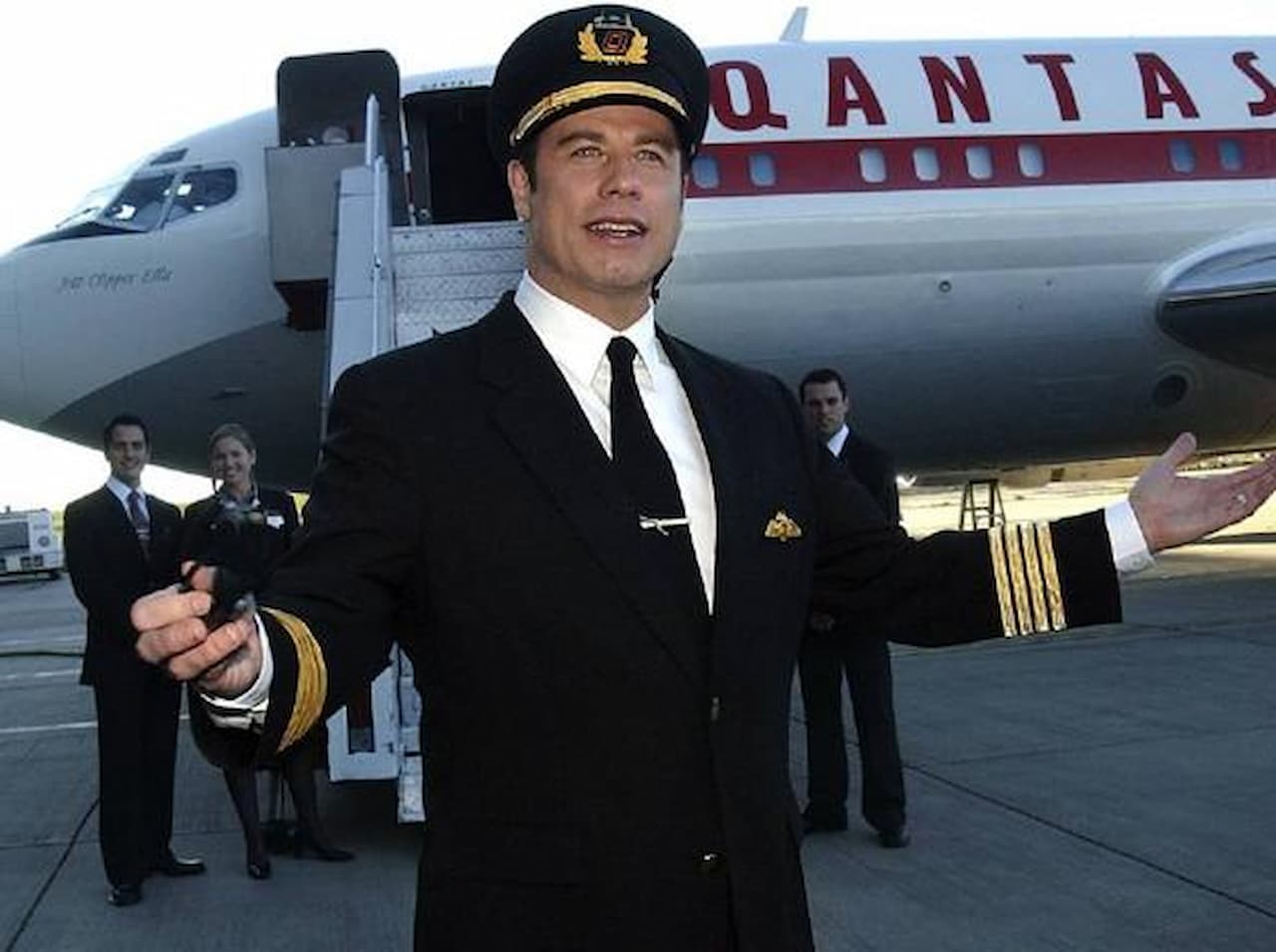
When discussing celebrities associated with the highest volumes of private jet use, it’s important to clarify one point: there is no up-to-date, verified ranking of flights taken personally by each VIP. The most frequently cited data comes from tracking aircraft associated with celebrities, and therefore does not necessarily prove that the owner was on board every flight. Yard itself explicitly points this out.
- Taylor Swift
- Drake
- Floyd Mayweather
- Jay-Z/Puma
- Kim Kardashian
- Alex Rodriguez
- Steven Spielberg
- Mark Wahlberg
- Blake Shelton
- Jack Nicklaus
How to Book a Private Jet Charter Transparent with Privatejetfinder.com
Behind every private flight are practical decisions: which aircraft to use, which airport to depart from, how many passengers will be traveling, how much luggage space will be needed, and what costs and fees will apply. This is information you need to know before you leave, not after.
On PrivateJetFinder, you can choose from the available aircraft for your destination and find the one that best suits your needs based on the number of passengers, distance, and luggage. You’ll receive a clear and detailed quote, with the various cost items listed up front.