
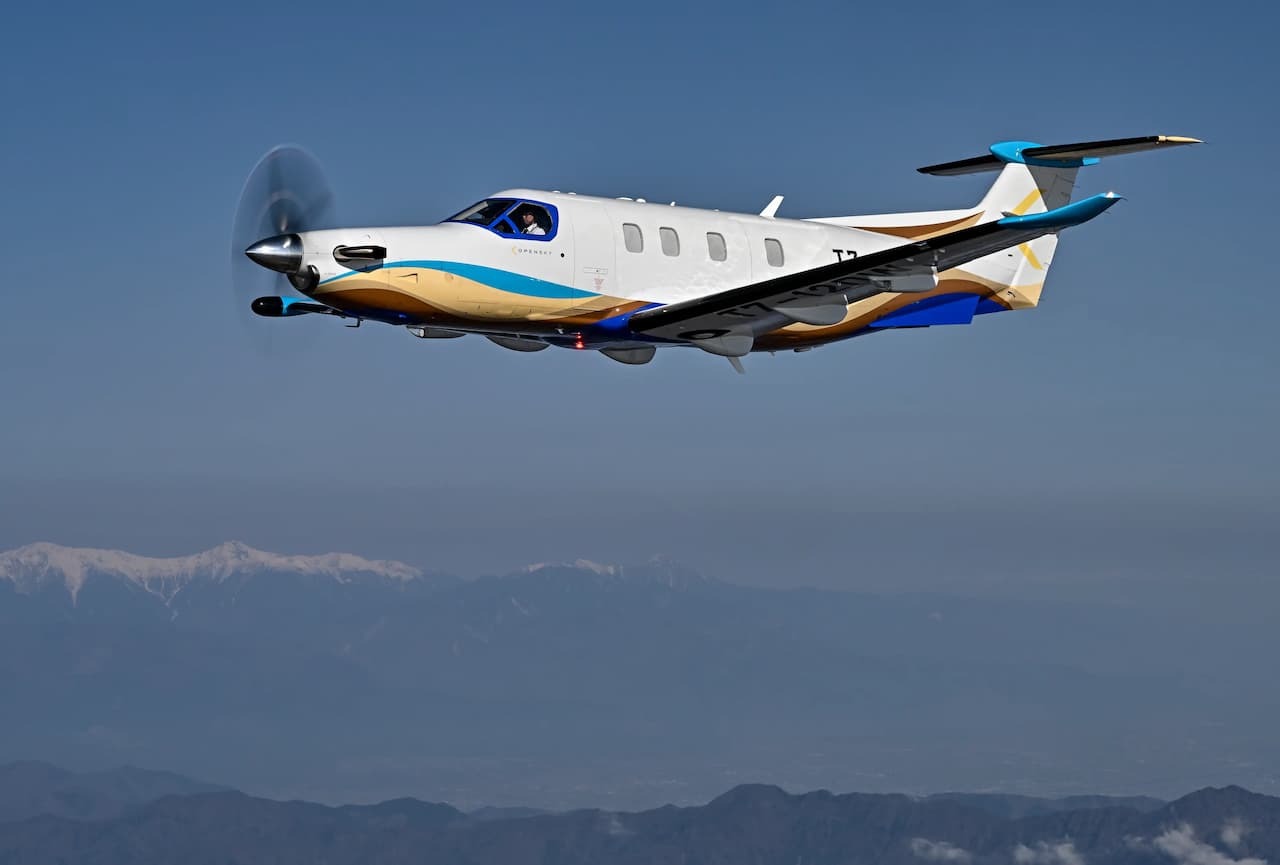
Modern turboprop business jets have features that make them particularly attractive for medium- and long-range private flights. They are fuel-efficient, can operate from airports with relatively short runways, and—despite flying slower than jet aircraft—offer surprising range.
The Daher TBM 960 and the Pilatus PC-12 NGX are two of the most interesting examples. The former can achieve a claimed range of 1,730 nautical miles in its maximum-range configuration, while the latter reaches 1,803 nautical miles with four passengers under the manufacturer’s reference conditions.
This performance makes it possible to consider even very long nonstop flights. But how far can a turboprop actually go? And which European routes can be flown with these aircraft without a refueling stop?
A route such as London Biggin Hill–Tenerife South, which is about 2,930 km long, provides a good understanding of both the potential and the limitations of this class of aircraft.
What is an executive turboprop aircraft?
A turboprop is an aircraft equipped with a turbine engine that transmits its power to a propeller. The configuration differs from that of a jet, but on modern executive aircraft, this does not necessarily mean sacrificing performance.
The main advantage is efficiency at the typical cruise speeds of these aircraft. A turboprop does not fly as fast as a light jet, but it can consume less fuel and maintain a very impressive range relative to its size.
In addition, there is the option of using airports that may be less suitable for larger business jets. This is a particularly useful feature in private aviation, as it allows travelers to get closer to their final destination by choosing from a wider range of stopover locations.
The result is a class of aircraft suitable not only for regional flights but also for missions that can exceed 1,000 nautical miles.
Daher TBM 960: over 1,700 nautical miles
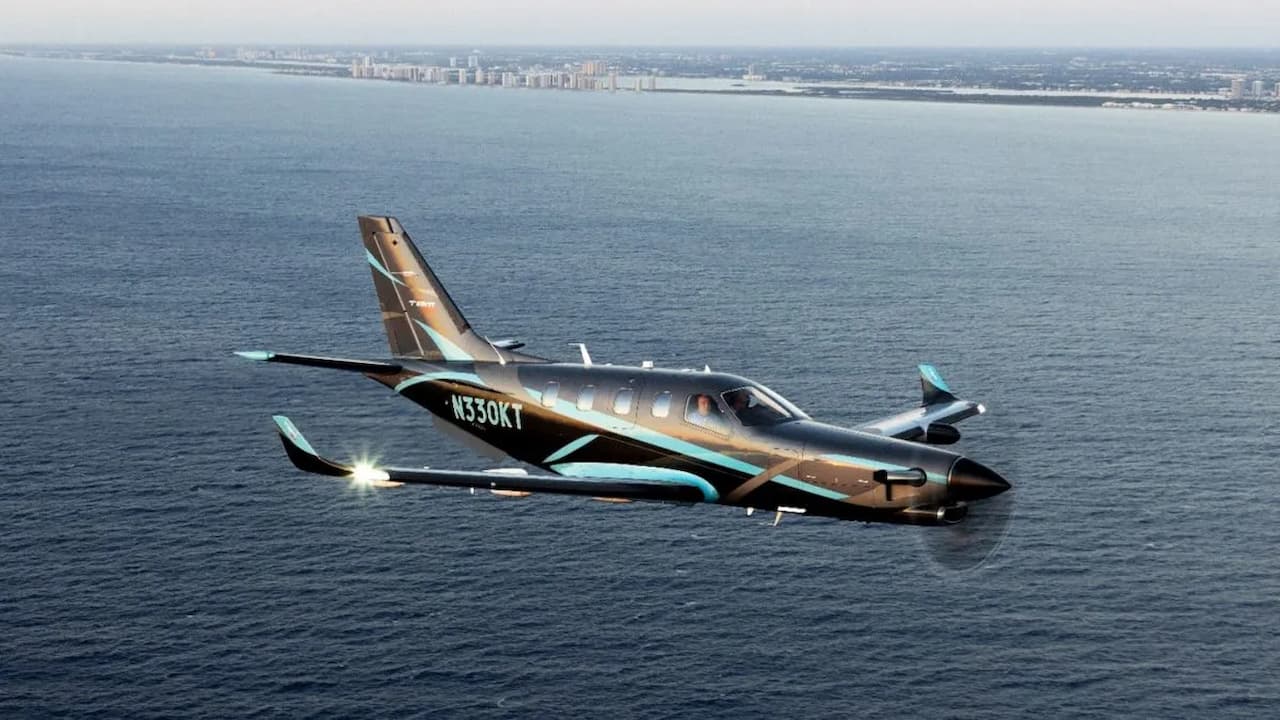
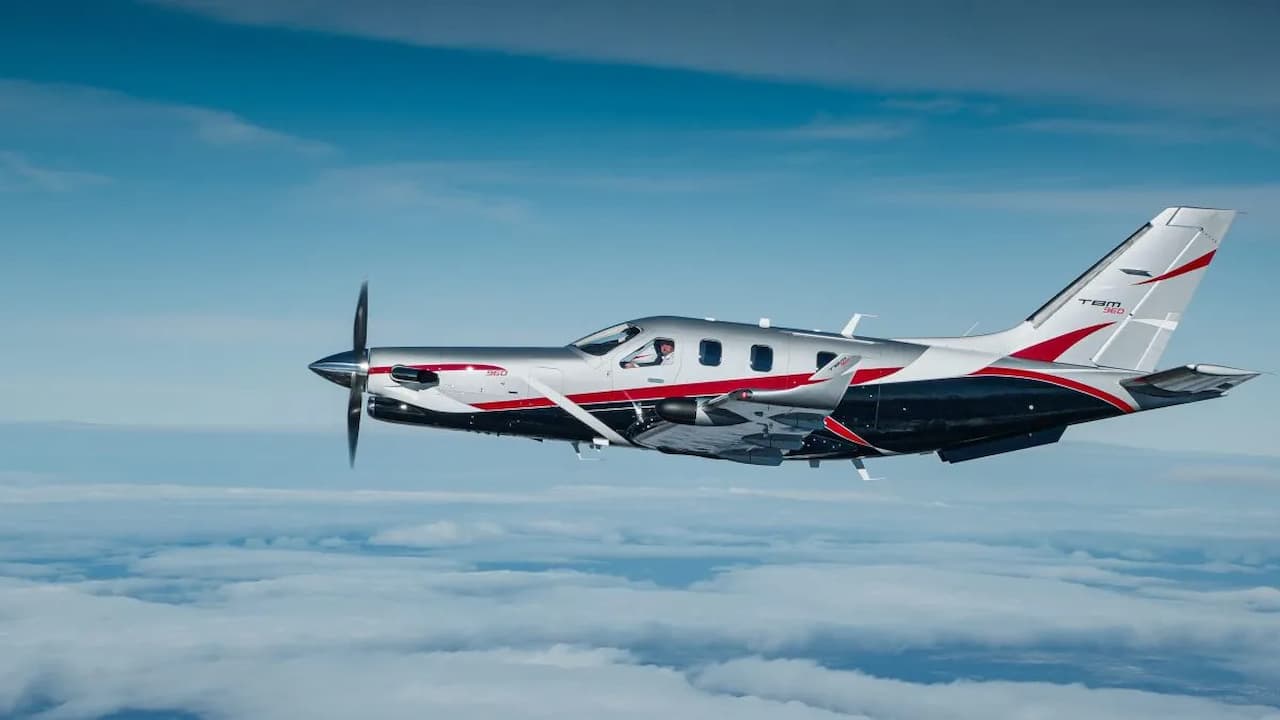
The Daher TBM 960 is one of the most extreme examples of an executive turboprop.
It is a compact aircraft designed for private and business travel, but with performance capabilities that allow it to handle even very long flights. The manufacturer states a maximum range of 1,730 nautical miles—equivalent to approximately 3,200 kilometers—in the standard configuration for maximum range.
This figure is particularly interesting because it is achieved without completely sacrificing speed. In fact, the Daher TBM 960 can reach a cruising speed of approximately 330 knots.
Of course, maximum speed and maximum range are not the same thing. To achieve the greatest possible range, you need to fly at a slower speed.
In fact, Daher specifies 1,730 nautical miles at 252 knots, while at 290 knots, the range drops to approximately 1,585 nautical miles. At a maximum cruising speed of 326 knots, the range is approximately 1,440 nautical miles.
It is a very clear example of the trade-off between speed and range that characterizes flying a turboprop.
Pilatus PC-12 NGX: Range and Cabin Space 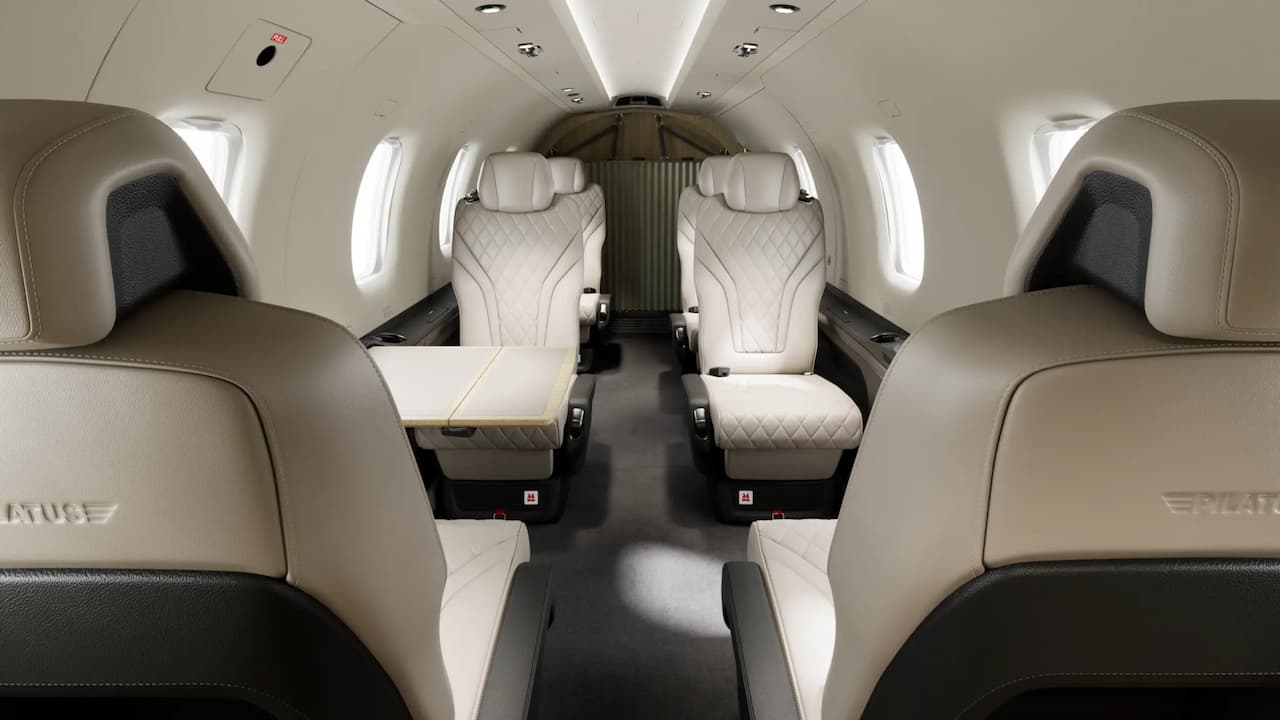
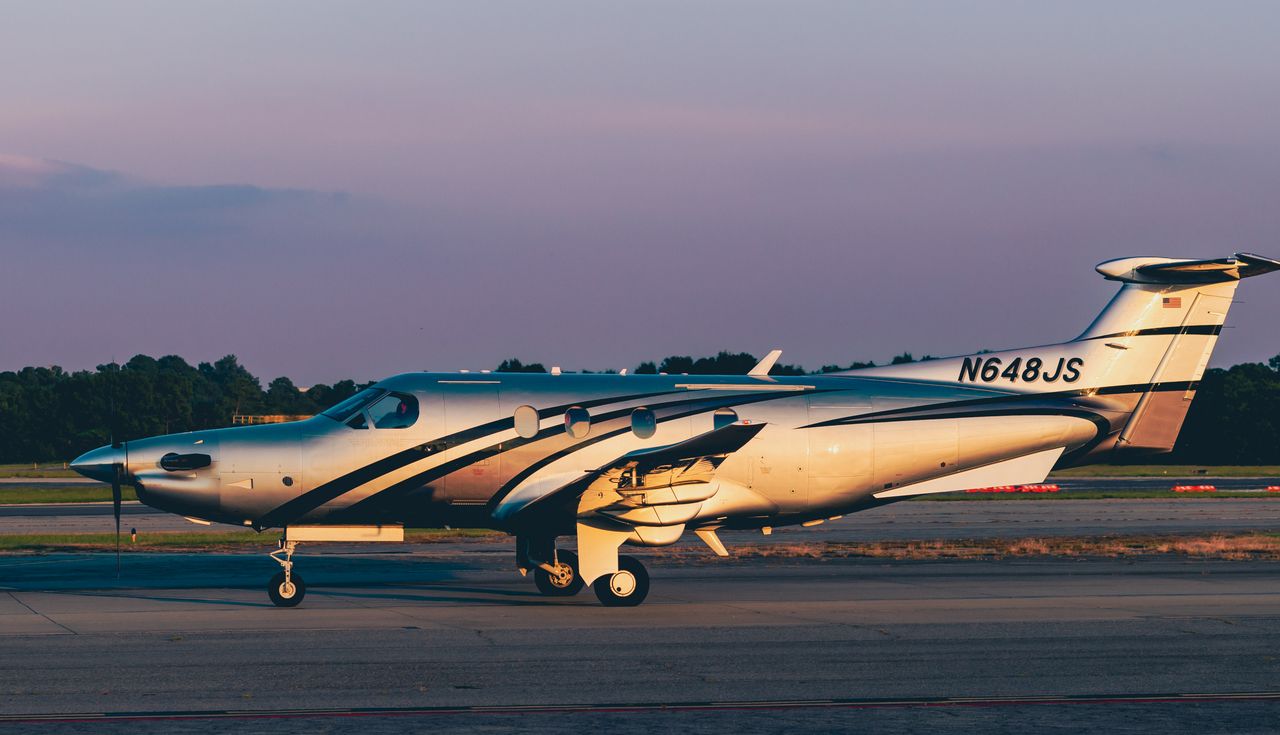
The Pilatus PC-12 NGX takes a different approach. It is larger than the TBM 960 and offers a particularly versatile cabin, a feature that has made it one of the most popular executive turboprops in the private aviation sector.
The range is also impressive. Pilatus specifies up to 1,803 nautical miles with four passengers. However, this figure changes as the number of passengers increases. With six passengers, the specified range drops to 1,568 nautical miles.
This difference is important because it shows how much the payload can affect a long-range flight. As the aircraft approaches its operational limit, even a few extra passengers—along with their luggage and the necessary fuel—can significantly affect the distance it can travel.
London-Tenerife: The Real Test for a Turboprop
The London-Tenerife route is an excellent test of just how far a modern turboprop can fly without stopping to refuel. The distance between London Biggin Hill and Tenerife South is approximately 1,582 nautical miles, or nearly 2,930 kilometers. This is a particularly long route for a European flight, one that can even be tackled by some of the smallest long-range private jets.
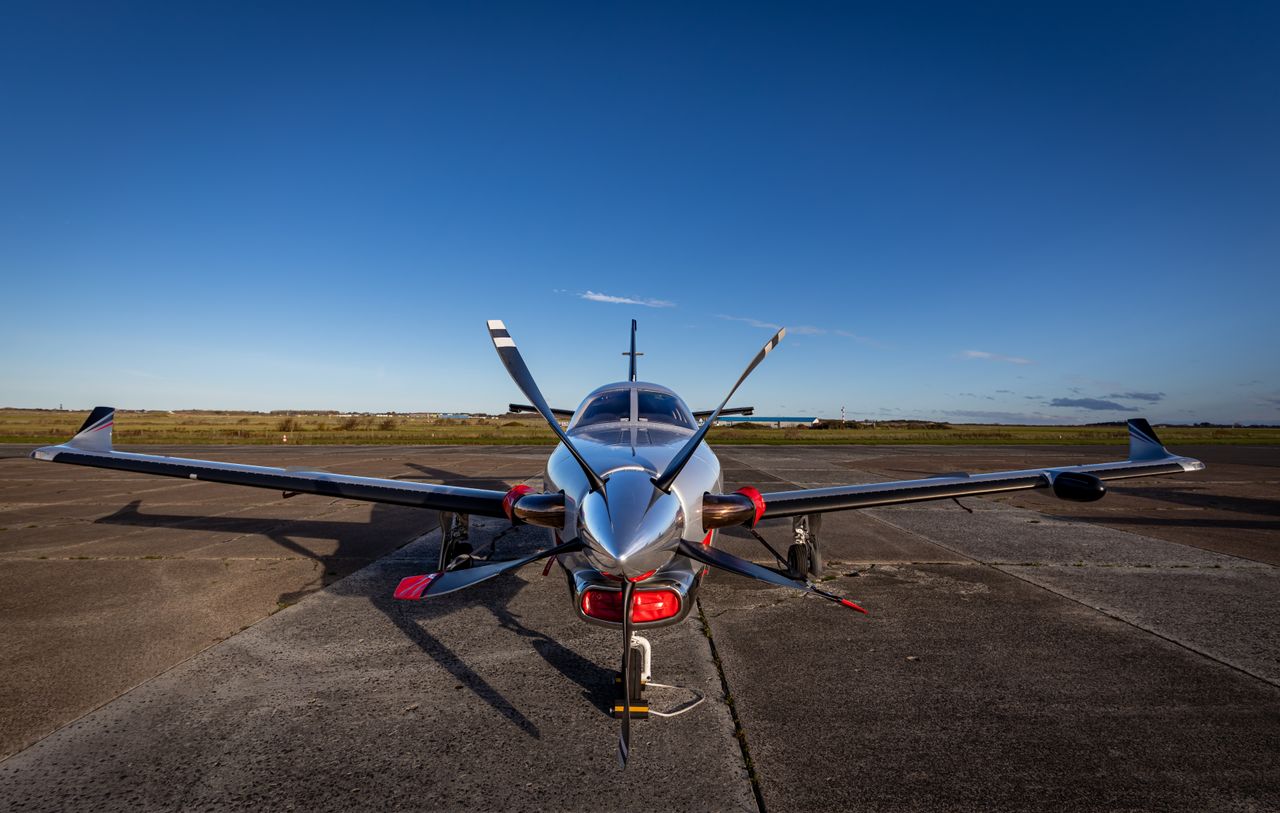
A comparison with the ranges claimed by manufacturers allows us to reach a conclusion right away.
The TBM 960 can fly up to 1,730 nautical miles (3,203.96 km) in its maximum range configuration. Under ideal conditions, therefore, its stated range exceeds the distance from Biggin Hill to Tenerife by approximately 150 nautical miles.
The PC-12 NGX can also theoretically cover the route: with four passengers on board, Pilatus states a range of 1,803 nautical miles (3,339.2 km), which is more than 200 nautical miles greater than the distance between the two airports.
However, the range varies depending on the load. With six passengers on board, the PC-12 NGX’s stated range drops to 1,568 nautical miles, which is less than the distance between London and Tenerife.
The conclusion is therefore clear: On paper, the London-Tenerife route falls within the range of a TBM 960 and a PC-12 NGX carrying four passengers, but it is not a route that can automatically be considered feasible without a stopover. The published range is, in fact, calculated under specific conditions, and the actual flight must take into account wind, weight, baggage, route, and fuel reserves.
When the margin is only a few dozen or a few hundred nautical miles, these factors become decisive.
How much has the situation changed on other European routes?
The London-Tenerife route is one of the most challenging, but you don’t have to travel nearly 1,600 (2,963.2 km) nautical miles to take full advantage of an executive turboprop’s range.
A flight of 1,000–1,200 nautical miles (2,222.4 km), for example, provides a much wider margin than the maximum range specified for the models mentioned. This makes it easier to manage operational variables without coming close to the aircraft’s limits.
Once the 1,400–1,500 nautical mile threshold is exceeded, however, planning becomes increasingly important. The model used, the number of passengers, and the chosen speed can make a significant difference in the available range.
That is precisely why a route like London to Tenerife is interesting: it isn’t just a long distance, but it allows us to see where the advantage of the stated range ends and where the limits of the actual mission begin.
A turboprop can therefore fly across a very large part of Europe without stopping, but there is no single maximum distance that applies to all aircraft. The real question before every flight is always: How much margin remains after taking all mission conditions into account?
Why do turboprops have this range?
The answer lies primarily in the efficiency of the propulsion system. A turboprop aircraft uses a gas turbine to drive a propeller. At the speeds typical for this category, this design provides good fuel efficiency.
The result is relatively compact aircraft that can offer remarkable range without having to carry the amount of fuel a jet of comparable size would need to carry out the same mission.
In the case of the TBM 960, this efficiency is combined with a speed that is particularly high for its class. In the PC-12 NGX, on the other hand, efficiency goes hand in hand with a more spacious cabin and greater versatility in transporting passengers and luggage.
These are two different interpretations of the same concept: using turboprop propulsion to achieve a balanced combination of range, operating costs, and flexibility.
More speed or more range?
This is one of the most important trade-offs when choosing a turboprop. In the case of the TBM 960, the numbers clearly illustrate this. At 252 knots—a setting optimized for maximum range—the model achieves 1,730 nautical miles. At 290 knots, the indicated range drops to about 1,585 miles, while at the maximum cruise speed of about 326 knots, it decreases to 1,440 nautical miles. For a relatively short flight, it may therefore make sense to prioritize speed.
When the flight nears its range limit, however, it becomes more important to find the right balance between speed and fuel consumption.
On a route such as London to Tenerife, the difference can be decisive: choosing a higher cruising speed means reducing flight time, but it also decreases the available range.
Which is better: a turboprop or a private jet?
Comparisons with light jets are inevitable on longer routes, but that doesn’t mean one category is always superior to the other.
A jet offers higher speeds and therefore reduces travel time. A turboprop, however, can offer surprising range relative to its size, as well as advantages in terms of efficiency and airport accessibility. The choice therefore depends on the mission.
If your priority is to reach your destination as quickly as possible, a jet may be the best option. If, on the other hand, your mission requires efficiency, good range, and the ability to use smaller airports, a turboprop such as the TBM 960 or the PC-12 NGX can be a very attractive alternative.
For this reason, when chartering a private plane, the choice of aircraft should be based on the route, the number of passengers, and the travel requirements—not simply on the aircraft category.
Flying across Europe nonstop on a turboprop
Modern executive turboprops now offer performance levels that make them viable options even for long-haul European flights.
The London-Tenerife case is particularly significant. The approximately 1,582 nautical miles separating Biggin Hills from Tenerife South fall within the stated range of the TBM 960 and the PC-12 NGX with four passengers, but bring the flight close enough to the limit that operating conditions become critical.
It is therefore incorrect to simply say that a turboprop can fly a certain distance without stopping. One must ask: which model, how many passengers, at what speed, and under what conditions?
This is precisely the most interesting feature of this category of aircraft: a turboprop is not necessarily synonymous with short-haul flights. The most modern models can connect very distant destinations directly and, on some routes, even rival larger jet aircraft in terms of range.
To arrange a private flight on a long-haul European route, contact PrivateJetFinder.com and evaluate which aircraft is best suited to the route, the number of passengers, and the specific needs of the trip.
Useful Links