
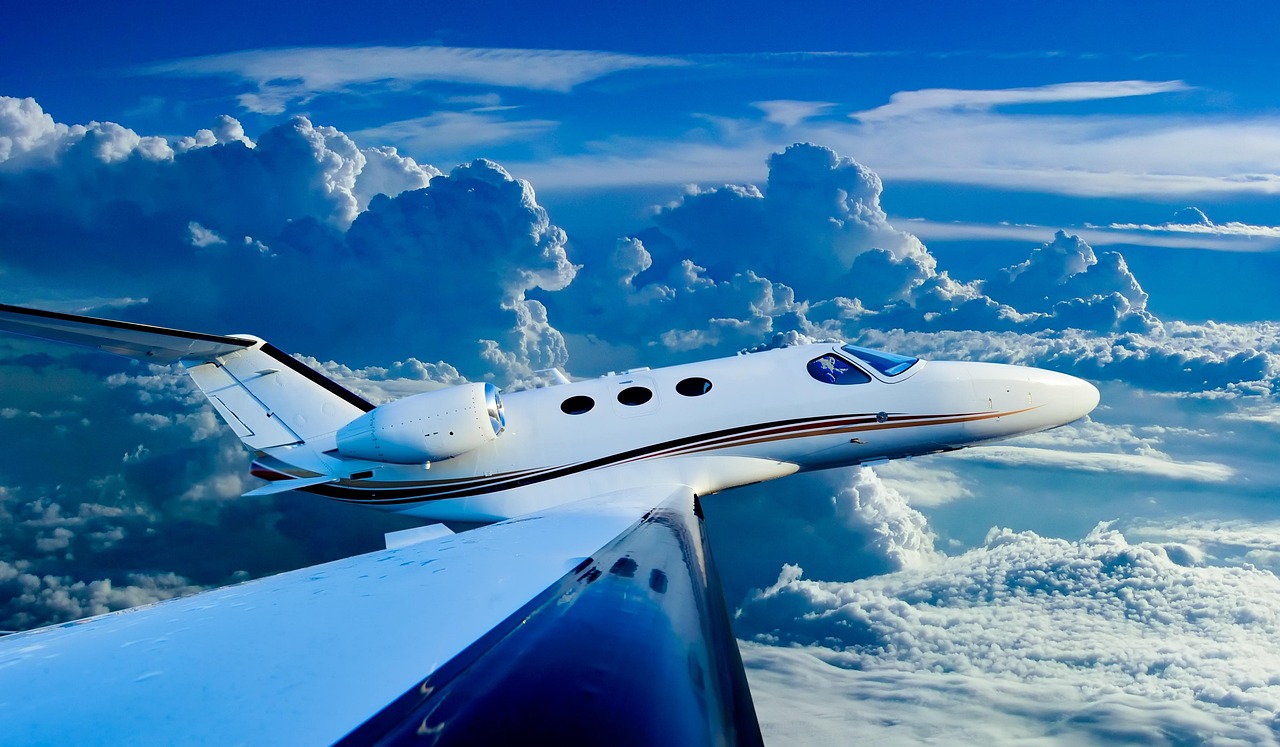
Anyone chartering a private jet between Milan and Lyon shouldn’t worry about turbulence: it’s just 283 km, less than an hour’s flight. Yet, according to data from Turbli—the leading portal for analyzing in-flight turbulence —this short route consistently ranks among the routes most exposed to turbulence in all of Europe, with an average EDR of 14.695.
The EDR (Eddy Dissipation Rate) is the standard unit of measurement used to quantify turbulence intensity on a scale from 0 to 100, regardless of aircraft type: It expresses the rate at which turbulent structures in the air dissipate into energy. It is the parameter adopted by ICAO and used by Turbli to compare thousands of routes worldwide in a consistent manner.
A score of 14.695 on the Milan-Lyon route, therefore, is not an isolated figure, but a direct point of comparison with any other route in the world—you can find the complete scale and global rankings in our in-depth report on the world’s strongest turbulence, where the Milan–Lyon route appears alongside routes such as Nice–Geneva and Nice–Zurich.
Here we’ll take a closer look at why this specific route is so turbulent, and which factors have the greatest impact on in-flight comfort.
Why Milan–Lyon Is a Route Prone to Turbulence
The explanation, as with almost all European routes with a high EDR, is geographical: the flight crosses the western Alps, where winds encountering the mountains generate so-called mountain waves — atmospheric disturbances that propagate even at a distance from where they form and can affect the aircraft for much of the journey.
With an EDR of 14.695, the average turbulence on this route still falls within the “light” range according to the scale adopted by Turbli (0–20 EDR): we are therefore referring to occasional minor bumps, not sudden or dangerous movements that could compromise the aircraft’s structure or control. This is an annual statistical figure, useful for understanding the route’s average exposure, not a prediction of what will happen on any given flight.
It is no coincidence that several European Alpine routes— Nice-Geneva, Nice-Zurich, Milan-Zurich, Nice-Lyon —all fall within the same range of values: it is the entire Alpine range, not a single section, that produces this pattern.

How and when can a pilot change course to avoid turbulence?
A private jet is not immune to turbulence in the physical sense—if it flies through the same turbulent air mass as another aircraft at the same altitude, it will experience it in the same way. What can make a difference is the crew’s ability to take action during the flight to mitigate its impact, and this is where the pilot’s work comes into play.
During flight, the crew receives up-to-date information on atmospheric conditions—weather radar data, forecasts, and, most importantly, pilot reports (PIREPs) transmitted by other aircraft that have just flown through the same area. If this data indicates turbulence, the pilot can request that air traffic control (ATC) change the altitude or, more rarely, the route, to move into a more stable layer of air.
However, this request is never guaranteed: it is granted only if it is compatible with the current air traffic in that airspace, the aircraft’s performance at that altitude, and the available fuel. The ATC has the final say, not the pilot, and on a short flight such as Milan Linate–Lyon Bron — just a 50-minute flight, a significant portion of which is spent climbing and descending—the cruise phase during which an altitude change can be made is objectively shorter than on a long-haul flight. This is also why, on short routes like this one, the factor that most affects perceived comfort remains the choice of aircraft itself, rather than the ability to “avoid” turbulence during the flight.
How to Choose the Cabin Layout to Minimize the Effects of Turbulence
In addition to the type of aircraft, the interior configuration of the cabin also affects how much a passenger feels the movements during turbulence. Seats located near the aircraft’s center of gravity, near the wing, are less affected by oscillations than those located toward the tail or the nose of the aircraft, where angular motion is amplified more—this is the same principle by which, on a ship, the motion of the waves is felt less in the middle of the hull than at the bow or stern.
Seat orientation also plays a role: forward-facing configurations tend to feel more stable than lounge-style or rear-facing ones, which are often found in executive cabins to encourage conversation during the flight. On a short route like Milan to Lyon, where comfort during turbulence is a specific priority, it’s worth noting this when booking to request, when available, a configuration with center seats facing forward.
Finally, larger and better-soundproofed cabins —a characteristic typical of medium jets compared to the more compact light jets—tend to make the motion less noticeable even when encountering the same amount of turbulence, simply because the interior space better absorbs the vibrations felt by passengers.
How much does it cost to charter a private jet between Milan and Lyon?
The price of a private flight on the route Milan Linate – Lyon Bron depends primarily on the type of aircraft chosen, as well as on availability, the day of the week, and how far in advance the reservation is made. Since this is a short route (283 km, approximately 50 minutes of actual flight time), the cost is determined more by the aircraft’s minimum hourly rate and fixed positioning costs than by the distance traveled itself:
-
Light jet — starting at €7,540, including taxes and fees
-
Medium jet — starting at €14,870, including taxes and fees
For most travelers on this route, a light jet offers the best balance of comfort and price, while a medium jet makes the most sense for larger groups or for those who want more space on board, even on a short flight, or—as noted above—for those seeking a more spacious, soundproofed cabin to further reduce the perception of turbulence.
Would you like to charter a private jet from Milan Linate to Lyon Bron? Contact us for a customized quote: we’ll analyze schedules and available aircraft, and the solution best suited to your needs for this route.