

In the popular imagination , flying on a private jet means traveling in the height of luxury, seated in fine leather chairs, enjoying the view, and—why not?—sipping extremely expensive cognac or champagne. That’s probably true: many VIP travelers do just that, and very often, up in the clouds, prices soar as well.
But what are the effects of alcohol at high altitudes? Is it true that it goes to your head more easily? And above all, how much does a bottle of champagne or cognac cost on a private jet?
Champagne and cognac: How much does a drink cost on a private jet?
Let’s start with the most obvious question: How much might a passenger spend to treat themselves to a glass of champagne on a private flight?
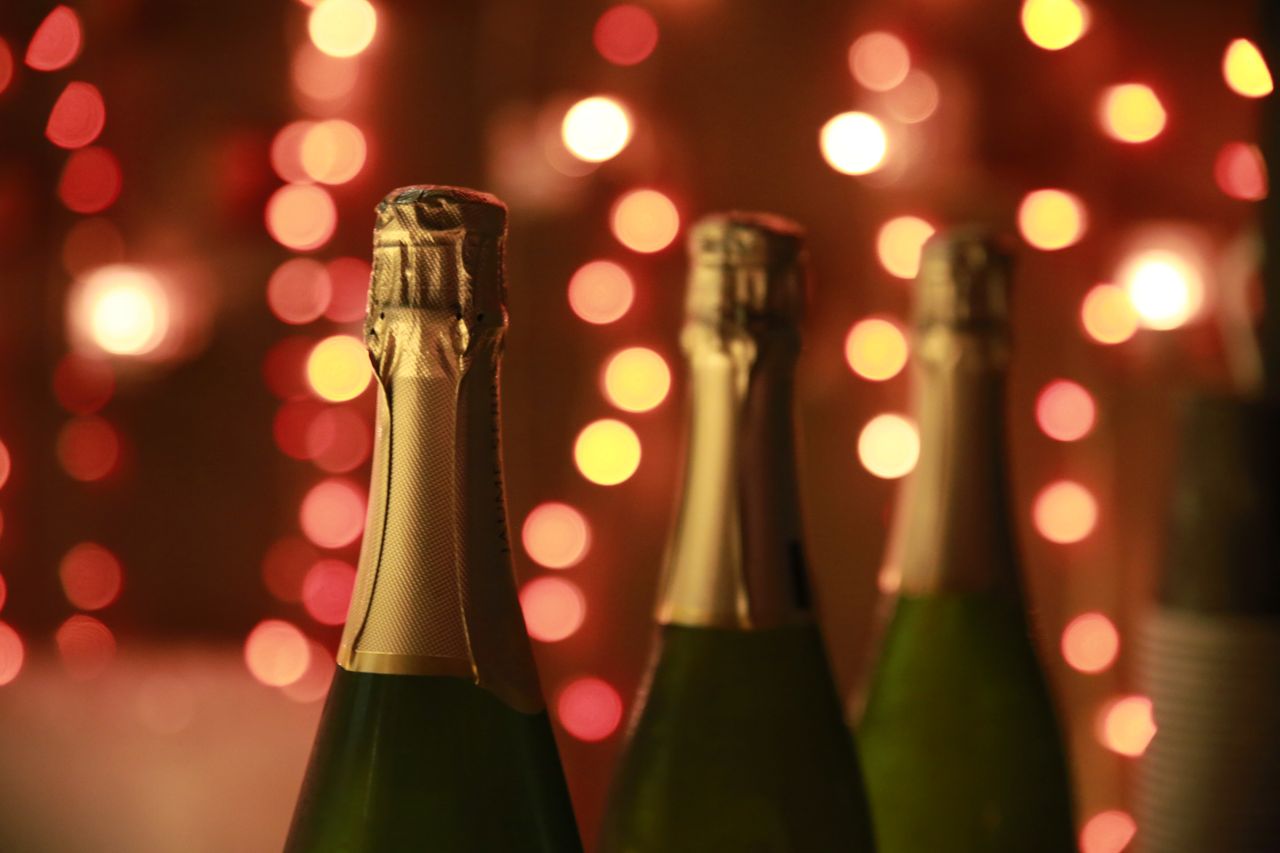
There is no standard pricing schedule. The price depends on the catering service and, of course, on the brands requested by the customer. In many cases, beverages are selected before departure and purchased specifically for the flight.
To get an idea of the prices, we can refer to a price list from a catering company specializing in U.S. private aviation. The published prices show a considerable difference between the best-known brands and premium bottles.
A bottle of Moët & Chandon Impérial is priced at $122, while a bottle of Veuve Clicquot Yellow Label costs $132. Moving up a tier, a bottle of Dom Pérignon Vintage costs $495, and a bottle of Krug Grande Cuvée costs $525.
Cognac can also command high prices: on the same price list , a bottle of Hennessy VSOP costs $138, while a bottle of Rémy Martin XO is priced at $468. For those who prefer whiskey, a bottle of The Macallan 18 Years goes for $595.
These are approximate prices from a specific provider and do not represent rates applicable to all private flights. The actual cost may vary depending on availability, the service requested, and the terms agreed upon with the operator.
The £20,000 cognac on the private flight
While a few hundred dollars for a bottle of champagne may already seem like a considerable sum, in the world of private aviation there are demands that are far more exclusive.
A rumor circulating in the industry tells of a truly unusual request: a 1836 Magnum bottle of Rémy Martin VSOP Champagne Cognac, from the French producer’s cellar. Its value was reportedly estimated at over 20,000 pounds.
This is not a regular bottle of champagne—despite the presence of that word in the cognac’s historical designation—but rather a French spirit of exceptional rarity and collectible value.
Another instance involves a bottle of Frerejean Frères Cuvée des Hussards 2007, a particularly rare champagne that is not available through regular retail channels. To fulfill the order, it was necessary to source it directly from the producer. In this case, the price was not disclosed.
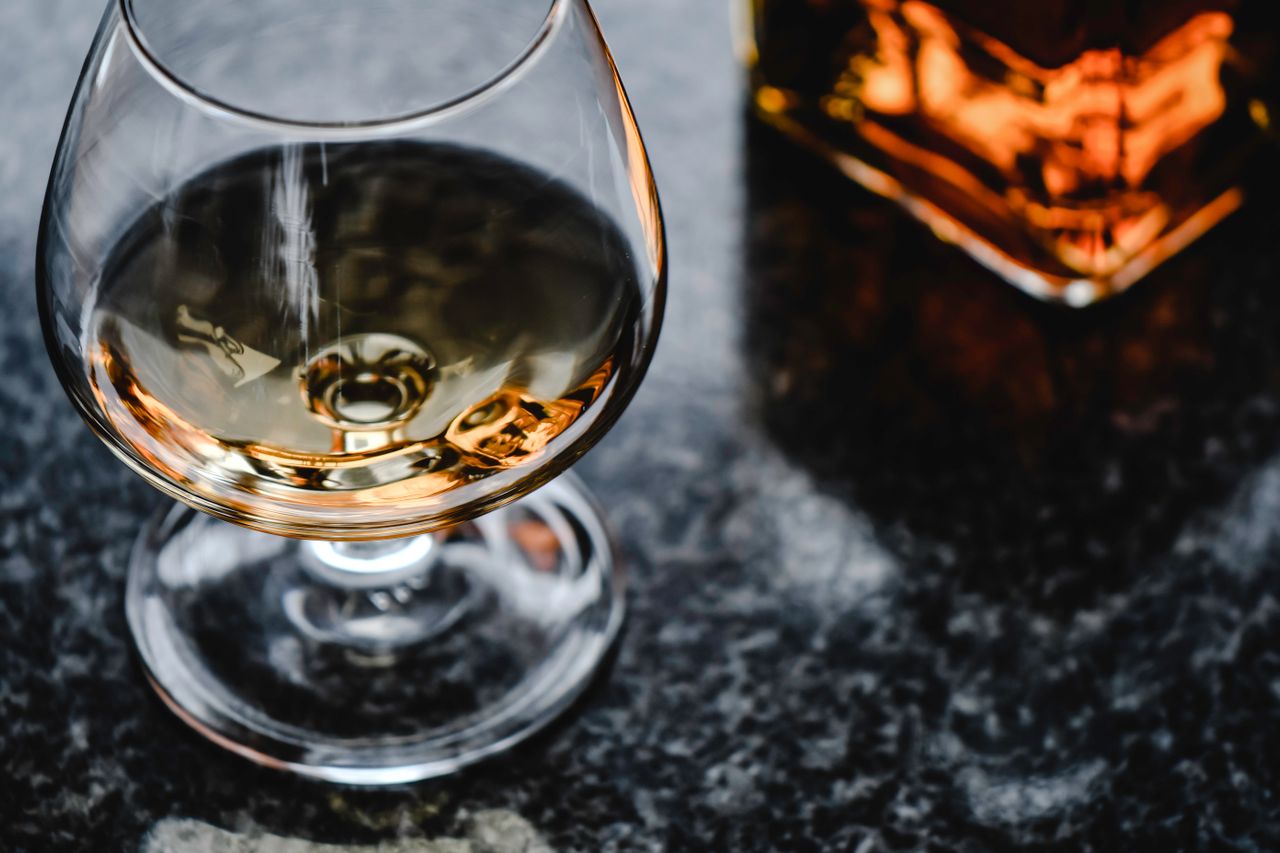
These examples clearly illustrate just how unique the requests of the wealthiest passengers can be. In fact, luxury doesn’t always simply mean drinking a prestigious brand: sometimes it means having a rare vintage on board or a product that normally can’t even be found in the most exclusive wine shops.
Does drinking alcohol on a plane have a stronger effect? What happens at high altitudes?
Now let’s consider some health-related questions: Can drinking alcohol during a flight have different consequences than when we’re on the ground?
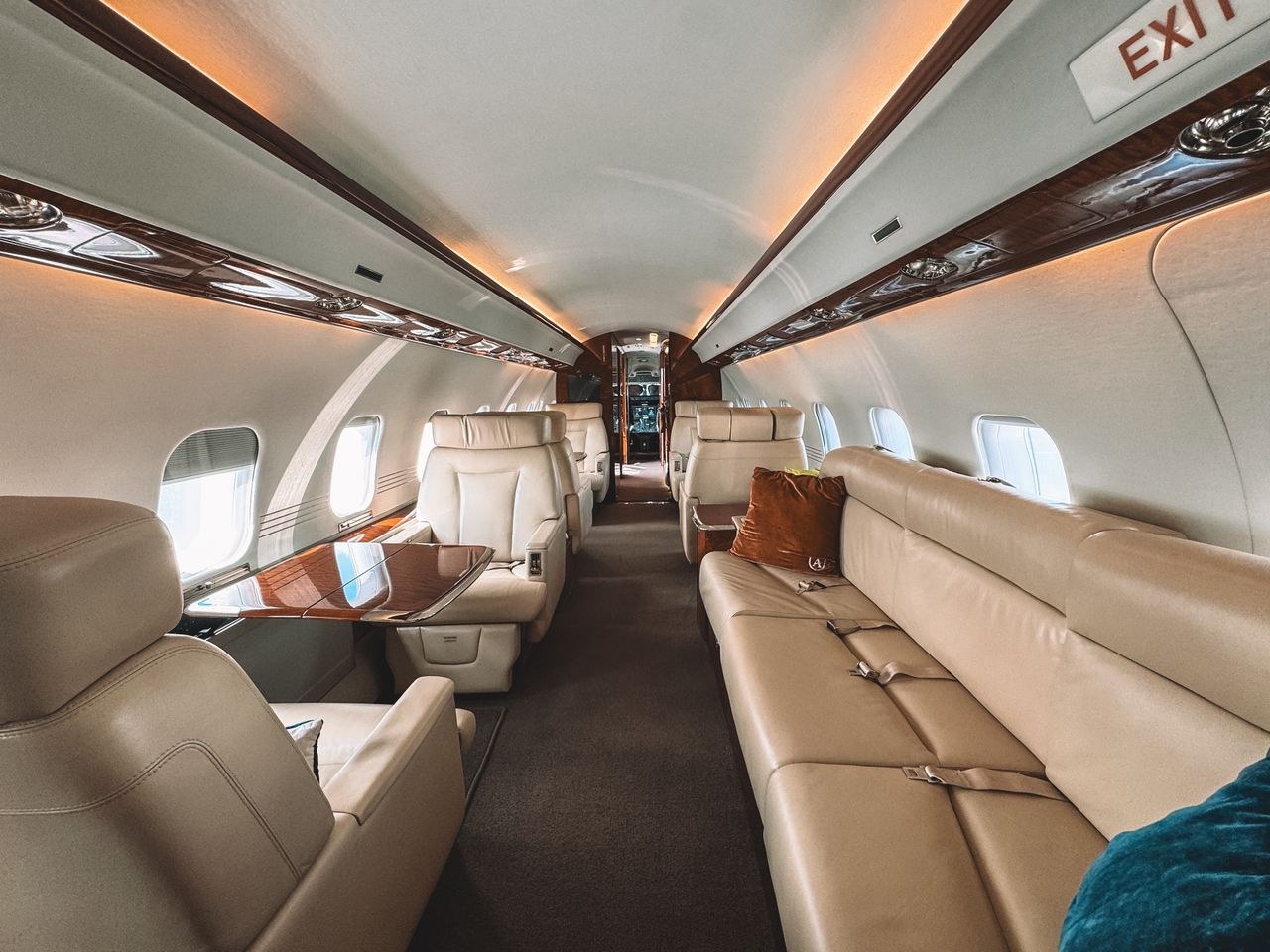
The answer deserves some attention. Private jet cabins are pressurized, meaning they maintain an atmospheric pressure inside the cabin that is lower than that at sea level. During flight, this pressure generally corresponds to that experienced at an altitude of between approximately 1,500 and 2,400 meters.
The result is a lower oxygen supply compared to conditions at sea level. In a healthy person, the body normally compensates for this phenomenon, but it can become more significant when combined with other factors, including alcohol consumption. For more information, read our article on private jet cabin design and pressurization.
It is precisely on this aspect that a study published in 2024 in the scientific journal Thorax , entitled Effects of moderate alcohol consumption and hypobaric hypoxia , focuses.
The study, conducted by a group of researchers from the German Aerospace Center, involved 40 healthy participants who were subjected to different experimental conditions. Some of the participants slept in a hypobaric chamber that simulated atmospheric pressure equivalent to an altitude of approximately 2,438 meters, while others underwent the test in a standard sleep laboratory.
The researchers compared the effects of alcohol consumption with those of a decrease in atmospheric pressure alone, focusing primarily on blood oxygen saturation and resting heart rate.
The results are interesting: under conditions combining alcohol and hypoxia, the median oxygen saturation dropped to 85.32%, compared with 88.07% recorded in the hypobaric chamber without alcohol. Heart rate was also higher, rising from about 73 to 88 beats per minute.
The study also found a decrease in the quality of deep sleep and an increase in the amount of time spent with oxygen saturation below 90%.
This does not mean that drinking a glass of champagne during a flight necessarily causes health problems. The study examined a specific combination of moderate alcohol consumption, reduced atmospheric pressure, and sleep. However, it shows that the combination of these factors may have more significant effects than one might imagine.
Does alcohol go to your head more easily at high altitudes?
There is no evidence that alcohol is absorbed more quickly simply because you are on an airplane. Ethanol metabolism does not automatically change with altitude, and there is no rule stating that a glass of champagne drunk at 10,000 meters is equivalent to two glasses consumed on the ground.
However, cabin conditions can make the experience less enjoyable. Lower atmospheric pressure, reduced oxygen levels, possible dehydration, and fatigue accumulated during the trip can compound the effects of alcohol.
In addition, alcohol can cause drowsiness, impair the quality of sleep, and make you feel more tired once you arrive at your destination.
For this reason, even when traveling in the utmost comfort, it’s best not to overdo it with alcoholic beverages and to remember to drink water during the flight.
The luxury of a private jet doesn’t mean you have to compromise on safety
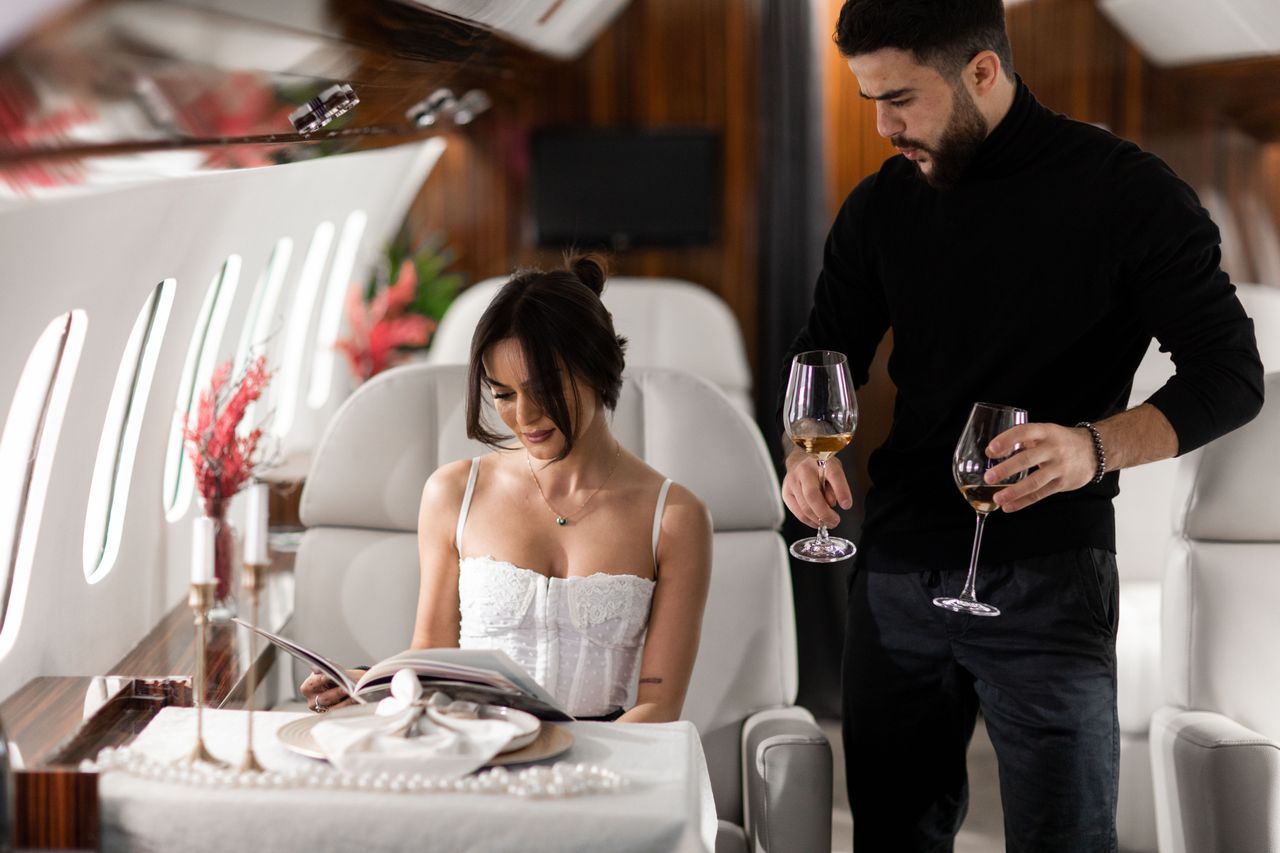
Vintage champagnes, cognacs aged for decades, and bottles worth tens of thousands of euros are part of a world where in-flight service can be customized down to virtually every detail.
The ability to request a specific label or to organize a toast with a rare bottle is certainly one of the most exclusive aspects of private aviation. But the comfort of a refined cabin does not alter the physiological conditions of flight. Even aboard a Gulfstream or a Bombardier, alcohol consumption requires caution, especially during longer flights and when you plan to sleep during the trip.
True luxury, after all, is arriving at your destination in the best possible condition, without a toast at high altitude ending up spoiling the pleasure of the trip.
See also: Gourmet Menus on Private Jets: The Catering Experience on Luxury Flights
PrivateJetFinder to plan your flight in detail
Contact us to request a personalized quote for any destination.
We’ll organize your private flight down to the smallest detail—from in-flight comfort to catering services—to provide you with a tailor-made travel experience. We respond very quickly, and our team will be by your side every step of the way: from choosing the aircraft to personalized in-flight services.